
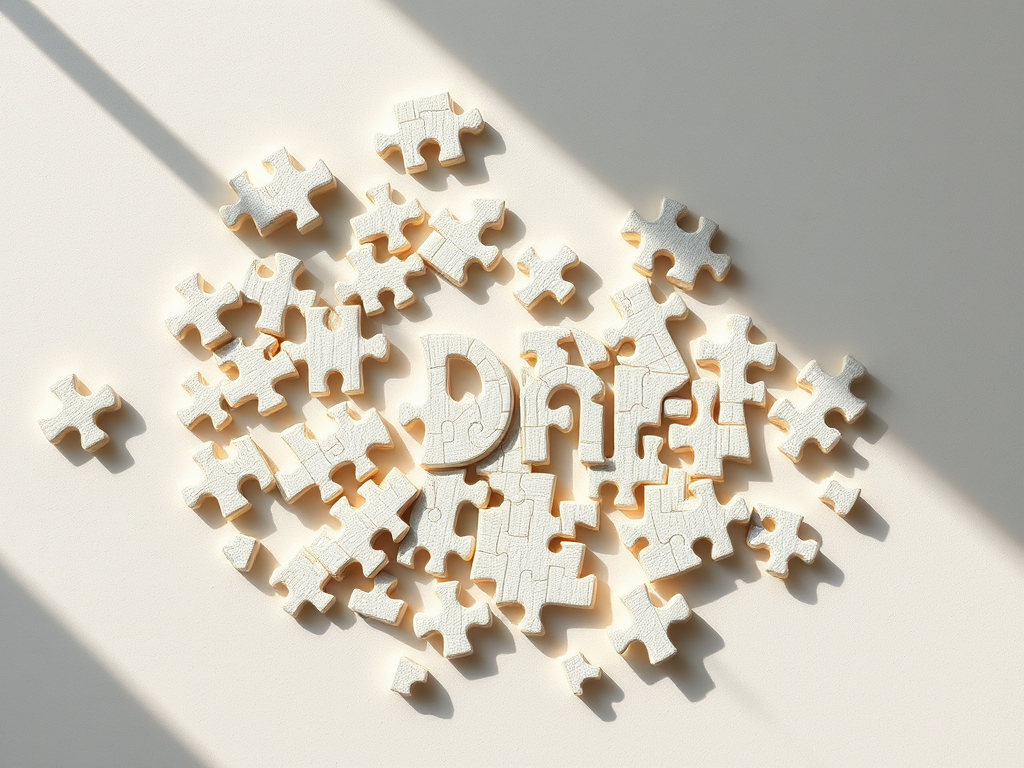
It doesn’t begin with a mistake.
No one sets out to weaken the product.
No team decides to dilute what made it meaningful.
In fact, most decisions are made with good intent.
A feature added to support a new customer.
A shortcut taken to meet a deadline.
A compromise accepted to keep momentum.
Each one makes sense in isolation.
And yet, over time, something begins to feel different.
Not broken.
Not obviously wrong.
Just… less certain.
Less intuitive.
Less trustworthy than it once was.
That shift is rarely announced.
But it is always experienced.
A Familiar Story — Repeated Across Products
Consider a product that earned trust early.
It was known for something specific:
Clarity.
Speed.
Simplicity.
Reliability.
Promises that were kept.
Quality that didn’t need to be questioned.
Users didn’t need a manual.
They didn’t need explanations.
That consistency became trust.
And that trust quietly became the brand.
Then growth arrived.
New users brought new expectations.
New markets introduced new requirements.
New opportunities demanded expansion.
And the pattern begins.
Drift Is Not Failure — It Is Accumulation
Products rarely collapse in a single moment.
They drift through accumulation.
Not of mistakes.
But of decisions that slowly stop aligning with intent.
Each decision is justified:
- By urgency
- By opportunity
- By customer demand
- By internal pressure
But justification is not alignment.
And over time, the distance between the two grows.
The Most Dangerous Part — It Feels Like Progress
Drift is difficult to detect because it often looks like improvement.
More features.
More flexibility.
More capability.
On paper, the product is getting better.
But experience is not defined by capability.
It is defined by coherence.
And coherence is fragile.
It doesn’t break instantly.
It dissolves.
When the Experience Starts to Shift

Nothing dramatic happens.
But something subtle changes.
- The path is no longer immediately clear — it requires thought
- The system explains more — because it is no longer self-evident
- The product works — but not as effortlessly as it once did
- Interactions feel heavier — even when functionality has increased
- Consistency gives way to exceptions
Individually, these are small.
Together, they change how the product feels.
And feeling is where trust lives.
When Alignment Weakens, Experience Fragments
At first, the original intent still shows.
Some parts remain clean.
Others begin to diverge.
The product becomes:
- Powerful, but harder to navigate
- Flexible, but less predictable
- Capable, but less trustworthy
This is where the fracture begins.
Not in failure.
But in inconsistency.
Brand Fracture Is a Downstream Signal
By the time people say:
“This doesn’t feel like them anymore”
the fracture has already happened.
Not in messaging.
Not in design.
But in accumulated decisions.
Brand does not break.
It reveals that something deeper has already shifted.
How to Recognize and Correct Drift
Most teams sense drift — but struggle to address it.
Because drift does not present itself as a problem.
It presents itself as progress.
Which makes it harder to question.
1. Revisit the Original Intent — Explicitly
Intent fades when it is not revisited.
Ask:
- What were we originally optimizing for?
- What did we consciously choose not to do?
- What trade-offs defined our identity?
This is not nostalgia.
It is recalibration.
Without a clear reference point, alignment cannot be restored.
2. Audit Decisions, Not Just Features
Most teams review features.
Very few review decisions.
Instead of asking:
“What have we built?”
Ask:
“What decisions led us here?”
Look for patterns:
- Where did we choose speed over clarity?
- Where did we add without simplifying?
- Where did exceptions become defaults?
Drift is visible in patterns — not individual features.
3. Identify Where Experience Feels Heavier
Users rarely say “your intent is misaligned.”
They say:
- “It’s getting complicated”
- “I’m not sure how this works”
- “It used to be easier”
These are signals.
Not complaints.
Map where the experience feels heavier:
- More steps
- More explanation
- More uncertainty
That’s where drift has materialized.
4. Remove With Intent — Not Just Add
Correction does not come from adding more.
It comes from removing with clarity:
- Remove unnecessary paths
- Simplify overloaded workflows
- Eliminate edge-case-driven complexity
This is uncomfortable.
Because removal feels like loss.
But in reality, it restores coherence.
5. Re-align Decision Principles
Drift happens when decision criteria change implicitly.
So make them explicit again.
Define:
- What do we prioritize under pressure?
- What do we protect even when growth demands otherwise?
- What will we consistently say no to?
Alignment is not a one-time exercise.
It is a continuous discipline.
6. Build Feedback That Detects Drift Early
Drift is easier to correct early.
Harder to reverse later.
So create signals:
- Where are users hesitating?
- Where are explanations increasing?
- Where is support load growing?
These are not operational metrics.
They are alignment signals.
A More Honest Question
Instead of asking:
“How do we improve the experience?”
Ask:
“Where have our decisions drifted from what we intended to be?”
That question changes everything.
Final Thoughts
Products don’t fracture brands in a moment.
🧭 The brands that endure are not the ones that resist change — but the ones that repeatedly return to what they chose to stand for.
Thanks for reading 🙏
Explore all articles at www.thepmpathfinder.com
Leave a Reply