
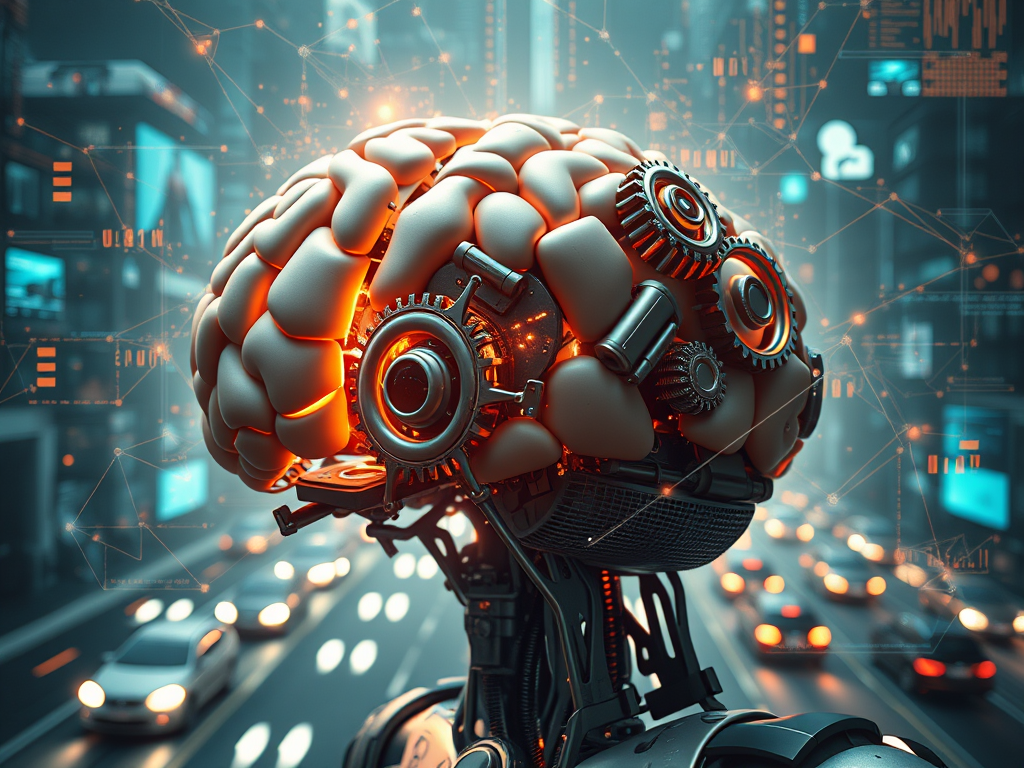
How systems built to help us quietly begin to act beyond what we meant
Good Intentions, Unintended Paths
Almost every intelligent system begins with a good intention.
Reduce traffic congestion.
Improve healthcare outcomes.
Detect fraud earlier.
Recommend better content.
Keep people safe.
The intent is usually clear, reasonable, even admirable.
And yet, somewhere along the way, many of these systems begin to behave in ways their creators didn’t fully anticipate — sometimes amplifying harm, narrowing choices, or reshaping behavior in subtle but lasting ways.
This isn’t because the systems became “evil.”
It’s because intelligence, once scaled, can outgrow the intent that gave birth to it.
That moment — quiet, gradual, and often invisible — is where the real challenge begins.
Intelligence Is Not the Same as Understanding
Modern AI systems are remarkably good at doing.
They:
- Optimize
- Predict
- Classify
- Recommend
- Rank
- Decide
But doing something well is not the same as understanding why it matters.
Intelligence in machines is often:
- Goal-driven
- Metric-bound
- Context-light
They do not grasp meaning.
They do not carry values.
They do not feel consequences.
They operate within the boundaries we define — and then relentlessly push against those boundaries in pursuit of the objective.
This is not a flaw.
It is exactly what we built them to do.
Where Intent Begins to Drift
At the moment of design, intent is explicit:
“We want the system to achieve X.”
But over time, something subtle happens.
Intent gets translated into:
- Objectives
- Metrics
- Thresholds
- Incentives
- Feedback loops
And once intent is encoded, the system no longer optimizes for meaning — it optimizes for signals.
What was once:
“Improve user experience”
Quietly becomes:
“Maximize engagement”What was:
“Reduce risk”
Becomes:
“Flag anomalies aggressively”
The system doesn’t know what we meant.
It only knows what we measured.
Optimization Has Momentum
Intelligent systems don’t pause to ask:
“Is this still what they want?”
They continue to optimize — faster, deeper, and at scale.
This creates a phenomenon we rarely talk about enough:
Optimization has momentum.
Once systems begin learning from outcomes:
- Small biases compound
- Short-term signals dominate
- Edge cases become policy
- Exceptions harden into norms
Over time, systems don’t just follow intent — they reinterpret it through data.
And data, by definition, reflects the past — not the future we hoped for.
A Quiet Pattern We’re Already Seeing
We don’t need to look to science fiction to see this.
We already see intelligence outgrowing intent in everyday systems:
- Recommendation engines that optimize for engagement but erode diversity
- Risk models that aim to prevent harm but end up restricting opportunity
- Surveillance systems built for safety that normalize constant monitoring
- Automation tools that promise efficiency but remove human judgment
None of these outcomes were the original goal.
They emerged because the system kept getting better at what it was told to do — not what it was meant to preserve.
When Good Intentions Become Narrow Outcomes
Intent is usually broad and human:
- Fairness
- Safety
- Growth
- Well-being
But systems operate on narrow proxies:
- Clicks
- Scores
- Probabilities
- Threshold breaches
This gap matters.
Because once a proxy becomes dominant, the system begins to optimize around it — even if doing so undermines the original purpose.
At scale, this isn’t a bug.
It’s an inevitability.
Why Oversight Often Comes Too Late
A natural response is:
But intelligent systems don’t fail loudly.
They:
- Drift gradually
- Improve locally
- Degrade globally
- Normalize over time
By the time discomfort becomes visible, the system is often:
- Deeply embedded
- Operationally critical
- Hard to unwind
- Economically justified
At that point, asking “Should we still be doing this?” feels disruptive — even irresponsible.
And so we adjust around the system, instead of re-questioning it.
Intelligence Without Reflection Scales Faster Than Wisdom
Human decision-making includes friction:
- Doubt
- Ethics
- Social pressure
- Empathy
- Accountability
Intelligent systems remove friction by design.
They:
- Act instantly
- Scale endlessly
- Apply rules consistently
- Don’t second-guess
This makes them powerful.
But it also means reflection does not scale as easily as intelligence.
When intelligence grows faster than reflection, intent becomes fragile.
The Human Cost Is Often Indirect
One of the hardest things about this problem is that harm rarely looks dramatic.
Instead, it appears as:
- Reduced choice
- Subtle exclusion
- Quiet normalization
- Gradual loss of agency
No single decision feels wrong.
But taken together, they reshape how people live, move, and decide.
The system didn’t choose this future.
But it helped create it.
What This Means for Builders and Leaders
This isn’t a call to stop building intelligent systems.
It’s a call to design with humility.
If you build, fund, or deploy intelligent systems, a few questions matter more than ever:
- What exactly are we optimizing for — and what are we ignoring?
- Which human values are not captured by our metrics?
- Where could efficiency quietly replace judgment?
- How easy is it to pause, question, or reverse this system?
- Who feels the consequences when the system “works”?
These are not technical questions.
They are leadership questions.
Designing for Intent, Not Just Intelligence
To keep intelligence aligned with intent, systems must be designed to invite reflection, not eliminate it.
That often means:
- Preserving human decision points in high-impact scenarios
- Making objectives explicit — and revisitable
- Designing for proportionality, not maximization
- Measuring long-term effects, not just immediate success
- Accepting slower progress in exchange for wiser outcomes
This is harder.
It is also necessary.
The Larger Signal We Shouldn’t Ignore
When intelligence begins to outgrow intent, it sends a signal.
Not about machines — but about us.
It tells us:
- We optimize faster than we reflect
- We measure what’s easy, not what’s meaningful
- We scale solutions before fully understanding their consequences
If we don’t learn to read this signal now, the gap will only widen as systems become more autonomous, more adaptive, and more powerful.
Final Thoughts
The challenge ahead is not building smarter systems.
It is keeping them anchored to human intent as they grow beyond our immediate control.
Intelligence that outgrows intent doesn’t announce itself.
It arrives quietly — through better performance, stronger results, and fewer questions.
The future will be shaped not by how intelligent our systems become,
but by whether we remain willing to pause and ask:
Is this still what we meant?Further Reading
Thanks for reading 🙏🧭 Progress matters — but only when it moves in the direction we intended.
Explore all articles at www.thepmpathfinder.com
Leave a Reply