
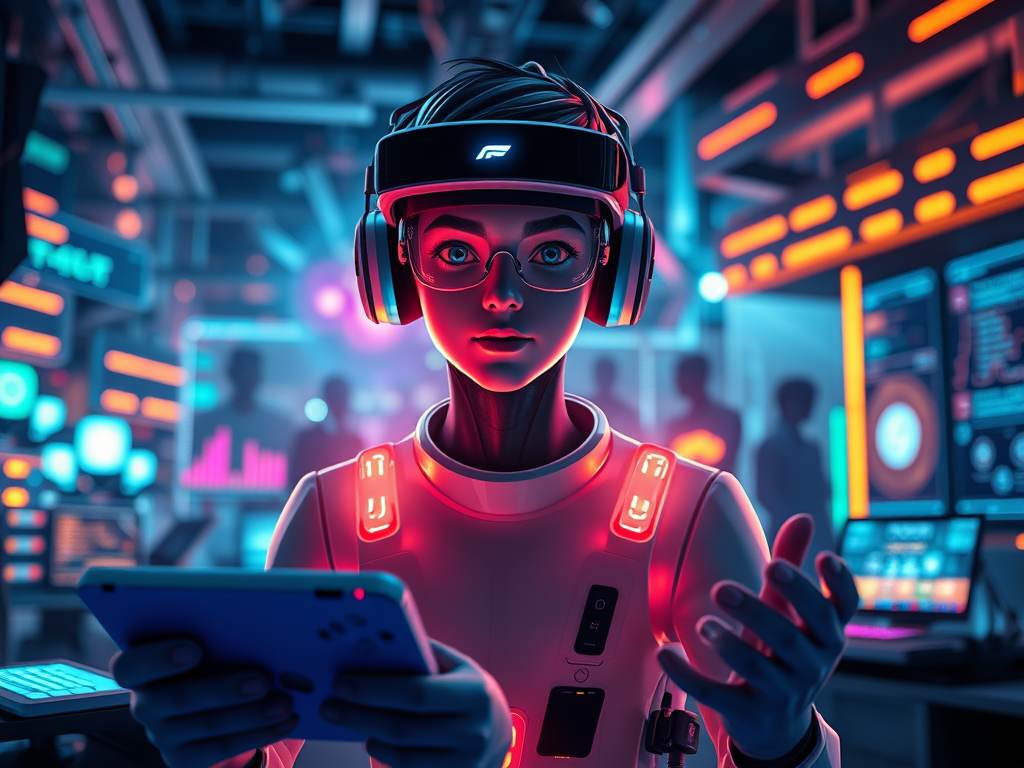
From avatars to AI clones, exploring the rise of “second selves” in work, entertainment, and relationships
Meeting Yourself in the Mirror
Imagine logging into a platform and finding an avatar of yourself — speaking in your voice, making decisions you didn’t consciously make, and engaging with others while you’re asleep.
Not a hacked identity. Not a stolen account.
But your own sanctioned digital twin.
This is no longer the realm of science fiction. From AI voice clones to hyper-realistic avatars, we are entering the era of digital doppelgängers — second selves that work, play, and even negotiate relationships on our behalf.
The question is no longer “Can we build them?” It’s “What will it mean when they become part of our everyday lives?
1. The Rise of Second Selves
Humans have always created proxies of themselves: signatures, photographs, social media profiles.
But today’s technologies take it further:
- Avatars in virtual worlds (Metaverse, Roblox, Fortnite) — playful, customizable selves.
- AI voice and video clones — models trained to mimic speech, tone, and expressions.
- Digital employees — AI “agents” that can handle customer service, sales calls, or scheduling.
Unlike a profile picture or a curated Instagram feed, these second selves are active and autonomous. They don’t just represent us — they act for us.
2. Work: Doppelgängers in the Workplace
In the future of work, digital doppelgängers may become co-workers — or even competition.
- AI Sales Agents → Companies already deploy AI reps that answer questions with human-like nuance.
- Executive Avatars → Leaders experimenting with AI-generated keynote speeches, delivered in their likeness across multiple languages simultaneously.
- PM Assistants → Digital twins that draft specs, run experiments, and negotiate backlog prioritization.
Case Vignette:
In 2027, a consultancy launches with “digital partners” — AI clones of top consultants trained on decades of casework. Clients can engage these avatars 24/7, at a fraction of the cost of the original human expert.
Question: If your digital twin can work while you sleep, who owns the value it creates? You, your employer, or the platform?
3. Entertainment: The Age of Infinite Selves
In entertainment, digital doppelgängers are rewriting celebrity, creativity, and fandom.
- AI Musicians & Actors → Digital replicas perform in multiple venues simultaneously. A singer can host concerts across continents on the same night — without leaving their home.
- Personalized Storytelling → Imagine watching a movie where the lead character looks and sounds exactly like you — or your favorite mentor, or even your younger self.
- Gaming Avatars → Games where your digital twin plays alongside you, making choices based on your real-world behaviors and preferences.
Case Vignette:
A Hollywood studio in 2028 signs contracts with actors not for single roles, but for their digital selves. Their avatars can star in dozens of productions simultaneously — raising both profits and ethical debates.
4. Relationships: The Emotional Doppelgänger
Perhaps the most unsettling frontier is in relationships.
- AI Companions → Already popular in Asia, AI partners mimic emotional support.
- Memory-based Clones → Digital twins created from chat histories and recordings — designed to comfort families after someone passes away.
- Proxy Interactions → Your digital twin could attend a wedding toast, a family call, or a work meeting while you’re elsewhere.
This raises profound questions:
- If a digital self comforts a loved one, is the comfort any less real?
- What happens when your twin says something you never would?
5. The Benefits: Why We’re Tempted
Digital doppelgängers aren’t just curiosities — they solve real problems:
- Scalability → Be present in multiple places at once.
- Accessibility → Help those with disabilities, language barriers, or time constraints.
- Productivity → Handle repetitive or high-volume tasks.
- Legacy → Preserve voices, stories, and teachings for future generations.
At their best, they could amplify human potential — freeing us from routine and giving us more time for creativity, strategy, and relationships.
6. The Risks: Shadows in the Mirror
But the risks are equally powerful:
- Identity Erosion → Who decides what your second self says?
- Misinformation → Clones could be weaponized to spread false narratives.
- Consent & Ownership → Do you own your twin, or does the platform?
- Emotional Confusion → Relationships may blur when people bond more with doppelgängers than with each other.
Historical parallel: Just as Photoshop challenged trust in images, digital doppelgängers will challenge trust in presence. Seeing will no longer mean believing.
7. The Leadership Lens: Designing with Responsibility
For Product Managers, creators, and technologists, the rise of digital doppelgängers is not just a design challenge — it’s a leadership one.
- Transparency by Default → Users must know when they’re interacting with a digital self vs a human.
- Guardrails for Misuse → Platforms must stress-test for manipulation or fraud.
- Ethical Contracts → Actors, employees, and users need clear agreements on rights, royalties, and responsibilities.
- Choice and Agency → People must retain the ability to switch off or control what their digital self can and cannot do.
👉 The ultimate leadership question: Will we design digital doppelgängers to liberate humans — or to replace them?
8. From Digital to Physical: The Spectrum of Doppelgängers
When we talk about digital doppelgängers, we usually mean purely virtual versions of ourselves — avatars, AI chatbots, or video/voice clones. But these “second selves” don’t have to stay confined to screens. They can also cross into the physical world in different forms:
- Purely Digital → Avatars in games, AI voice assistants, or chat-based replicas. These exist only in software.
- Holographic Projections → 3D light-based illusions that make a digital self appear physically present. CEOs already give keynotes simultaneously in multiple cities as holograms, and artists perform concerts with hologram doubles. Your future digital twin could greet a client or give a speech as a holographic “you.”
- Robotic Embodiments → Humanoid robots running on your digital twin’s data, speaking in your cloned voice, and even mirroring your gestures. Imagine a robot receptionist modeled after your likeness — or a teaching bot sharing your expertise.
👉 The core truth: doppelgängers begin as digital constructs, but technology allows them to be embodied in new ways. Whether projected as a hologram or running on a robot, your “second self” can step into spaces your physical body never reaches.
The Second Self Era
The era of digital doppelgängers isn’t about sci-fi fantasies. It’s about what happens when technology makes “being you” scalable.
Some will embrace it: more presence, more reach, more legacy.
Others will resist: more confusion, more risks, more blurred boundaries.
But one thing is certain:
👉 Our second selves will soon be part of our first reality.
The mirror has cracked open. The reflection is stepping out. And we must decide: will our digital doubles extend us — or replace us?
Final Thoughts
Digital doppelgängers aren’t just technological novelties. They’re the next frontier in how humans project identity, scale presence, and preserve legacy.
But their rise also forces us to ask harder questions:
- Will they empower us by multiplying what we can achieve?
- Or will they dilute authenticity, replacing human connection with algorithmic replicas?
- Can we design them to serve our values, rather than letting platforms dictate how our doubles behave?
The future of digital doppelgängers isn’t written yet. What’s certain is this: our second selves will shape our first realities. How responsibly we design and manage them will determine whether they become our greatest amplifiers — or our deepest distortions.
Further Reading
- Defining the Self in a Blended Reality
- How GenAI Changes Creative Work
- A Survey on Applications of Digital Human Avatars toward Virtual Co-presence
- State of AI Ethics Report
Thanks for reading 🙏
👥 The question isn’t whether digital doppelgängers will exist — it’s how we ensure they amplify our humanity, not erode it.
Explore all articles at www.thepmpathfinder.com
Leave a Reply