
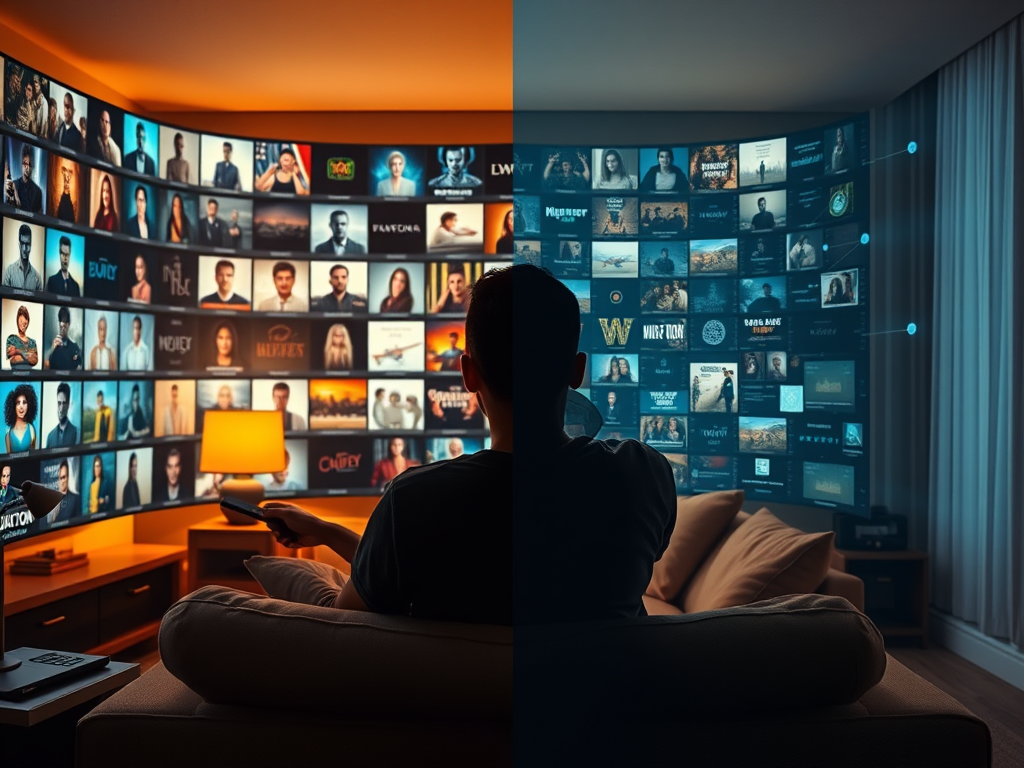
The Movie You Didn’t Choose
You sit down after a long day, remote in hand, determined to pick the perfect movie. Netflix greets you with a wall of thumbnails: Top Picks for You, Trending Now, Because You Watched…
Five minutes later, you hit play.
But pause for a second: did you choose that film, or did Netflix’s algorithm choose it for you?
The truth is, you never saw the full catalog. You only saw what the algorithm placed in front of you — ordered, filtered, and styled to nudge your decision.
What feels like freedom of choice is often the curated illusion of choice.
The Illusion of Free Choice
Recommendation engines were created to help us cut through overwhelming options. But in 2025, they are less guides and more architects of behavior.
Netflix: Of 6,000+ films, the average user sees fewer than 50 before deciding. The rest? Invisible.
Amazon: 35% of purchases come from recommendations — nudges, bundles, urgency tags.
TikTok: Its For You page isn’t magic — it’s micro-pause tracking, sentiment scoring, and reinforcement learning designed to keep you scrolling.
The genius of algorithms is subtlety. They don’t force choices. They create the context where your choice feels natural.
Real-Life Scenes of Algorithmic Influence
The Online Shopper Meera logs into Amazon to buy a water bottle. She leaves with a bundle: bottle, cleaning brush, insulated cover. Smart suggestions turned a $15 intent into a $50 basket.
The Endless Scroller Diego opens TikTok for “a quick laugh.” Ninety minutes later, he’s still scrolling. Why? The app noticed he lingered slightly longer on football clips. What started as light entertainment became a funnel into sports betting and fantasy leagues.
The Movie Night Arjun swears he’ll watch a documentary a colleague recommended. But Netflix buries it. Instead, a glossy thriller labeled 98% Match wins his click. Engagement, not discovery, was the real driver.
These aren’t accidents. They’re designed experiences.
The Behavioral Science Behind It
Recommendation engines borrow from psychology:
- Choice Architecture: People default to what’s most visible.
- Variable Rewards: Like slot machines, feeds keep us hooked with unpredictability.
- Loss Aversion: “Only 3 left in stock” is not information — it’s urgency.
These are not side effects. They are intentional levers.
Who Holds the Responsibility?
Algorithms are not neutral. They are business strategies, written in code.
- For companies → Revenue, engagement, retention.
- For users → Fulfillment, diversity, authenticity.
- For society → Fairness, culture, democracy.
The tension is clear: the algorithm optimizes for corporate KPIs, not always for human outcomes. That doesn’t make them malicious — but it does make them misaligned. And when those misalignments scale to billions of micro-decisions daily, the invisible hand doesn’t just shape consumer behavior… it reshapes culture itself.
Reclaiming Agency: A Future Framework
If algorithms shape our choices, the future of freedom is about shaping algorithms back.
1. Radical Transparency Not just “Why am I seeing this?” — but exactly what signals and incentives drove the recommendation. Imagine: “This film ranks high because it keeps viewers watching longer, and you paused on 3 suspense shows last week.”
2. User-Tunable Algorithms Sliders for choice. Want your feed more diverse? Less commercial? More serendipitous? Agency comes from control panels, not passive consumption.
3. Cultural Diversity as a KPI Platforms already track uptime and churn. Why not track exposure to difference? Imagine Netflix surfacing 10% of films outside your typical pattern. TikTok rotating in global creators. Diversity by design, not accident.
4. Personal Algorithms The boldest future: users bring their own AI curators. Instead of being shaped by corporate KPIs, imagine training your algorithm on your values — curiosity, balance, long-term growth — and plugging it into platforms.
Why This Matters for Professionals
If you’re a PM, marketer, or business leader, this isn’t just theory. It’s a mirror.
Are you designing for attention or for agency?
Are you optimizing for what people want now or what helps them thrive long-term?
If your product nudges millions of micro-decisions every day — whose invisible hand is at play?
Final Thoughts: The Choice to Choose
The invisible hand of algorithms doesn’t snatch choice away. It simply tilts the table.
The risk isn’t that we stop choosing. It’s that we stop noticing how little we actually do.
As culture, commerce, and politics are increasingly mediated by algorithms, the question isn’t what we’ll watch, buy, or click next.
The question is: Will we reclaim the choice to choose — or let algorithms keep choosing for us?
Further Reading
For deeper context on responsible AI and algorithms:
Thanks for reading 🙏
🧭 Let’s reclaim the choice to choose — and ensure algorithms serve us, not the other way around.
Explore all articles at www.thepmpathfinder.com
Leave a Reply