
What we lose when technology gets too “invisible” — and how to respond with awareness and intent
The Room That Listens Back
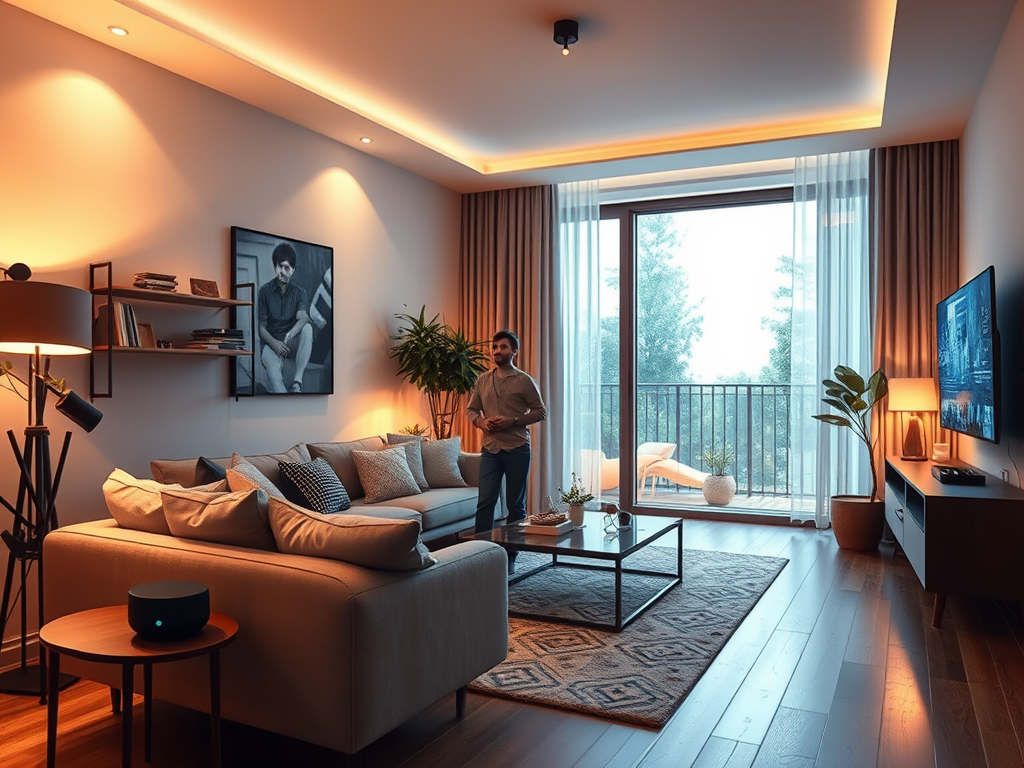
You walk into your living room.
The lights adjust softly.
The thermostat whispers to the perfect temperature.
Your favorite playlist starts in the background.
You didn’t ask.
You didn’t touch a thing.
You just… entered.
It feels like magic.
But here’s the catch:
When technology becomes invisible, we stop noticing its presence — and its choices.
And when we stop noticing,
we stop questioning.
We’re entering an era where our homes, devices, and environments don’t just respond — they shape what happens around us, often without us realizing it.
This is the Silence of Smart Things.
And this silence demands attention — not fear, but responsibility.
The Era of Ambient Intelligence
For decades, interaction meant intent.
- You clicked a button.
- You pressed a key.
- You gave a voice command.
Now, interaction often means being present.
- The lights come on when you enter.
- Your phone suggests leaving early based on traffic — without you asking.
- Your fridge reorders groceries based on “learned patterns.”
- Security cameras shift modes based on your location.
This is ambient intelligence — technology that perceives and acts within your environment, quietly.
The interface fades away.
But so does the friction — the moment where you might have paused and thought.
The Risks of Passive Control
Convenience is a trade-off.
Every invisible interaction costs us something — even if that cost is subtle.
Here’s what’s quietly eroding:
Agency
Decisions are made for us, not by us.
When was the last time you chose your own playlist on an “auto-mix” day?
Attention
The more seamless the experience, the less we question it.
We lose awareness of patterns shaping our behaviors.
Consent
Actions happen without explicit permission.
Have you ever found an ad for a product you merely spoke about, not searched?
Context
We forget that data is being collected — not just about what we do, but where, when, how often, and even how we feel.
The quieter the system, the louder its unseen influence.
And if we’re not careful, we drift from users to subjects.
The Invisible Trade-offs We Live With
🏠 Smart Homes
Motion sensors, cameras, microphones — ever-present, ever-watching.
Who owns the logs? How often are they cleared? Do we remember granting access?
🛍 Smart Commerce
Recommendations simplify shopping — but also shape taste.
The path from “this is helpful” to “this is all I see” is a short one.
🎧 Smart Content
Autoplay, curated feeds, algorithmic discovery — effortless, endless… and numbing.
You used to choose what to watch. Now it chooses what you’ll watch next.
Each of these systems whispers:
“Don’t worry. We’ve got this.”
But in trusting the system, we risk forgetting to trust ourselves.
Why This Moment Matters
We are designing futures where our environments think for us.
That power demands reflection:
- Who gets to set the “default” behaviors?
- How much agency do users retain over time?
- Is frictionless always desirable?
The line between frictionless and mindless is dangerously thin.
A Path Forward — Designing With Awareness
This isn’t a call to reject smart tech.
It’s a call to adopt it consciously — as designers, builders, and users.
Here’s how:
1. Build in Moments of Reflection
Design systems that occasionally ask:
“Is this still working for you?”
“Do you want to adjust this behavior?”
2. Make Intelligence Visible
Explain why the system acts:
“Music started because you often listen at this time.”
Give users a mental model of what the system is learning.
3. Reinforce Consent as a Journey
Revisit permissions periodically.
Offer clear settings dashboards — not hidden toggles.
Transparency earns trust.
4. Provide an Activity Log
Let users see what decisions the system made, and why.
Empower them to review and revise patterns.
5. Always Leave Room for Override
Smart things should be helpful — not in charge.
Make it easy to pause, mute, or override automated behaviors.
A system you can’t say “no” to is no longer assistive — it’s coercive.
Final Thought: A Positive and Responsible Outlook
We don’t need to fear the silence of smart things.
But we mustn’t ignore it.
We must adopt these systems as conscious participants, not passive recipients.
As individuals:
- Stay curious about how your tools behave.
- Regularly review your permissions and defaults.
- Embrace friction where it preserves awareness.
- Demand transparency from the products you adopt.
As builders:
- Design for dialogue, not control.
- Make intelligence legible.
- Give users the tools to remain the true driver of their experience.
The future will be full of invisible technology.
But it is up to us to ensure it serves visible human values.
Silence can be elegant.
But let’s make sure it’s the right kind of silence — not the kind that quietly takes something away.
Thanks for reading 🙏
Stay aware! Stay intentional! Let your choices shape your tech — not the other way around.
Explore all articles at www.thepmpathfinder.com
Leave a Reply